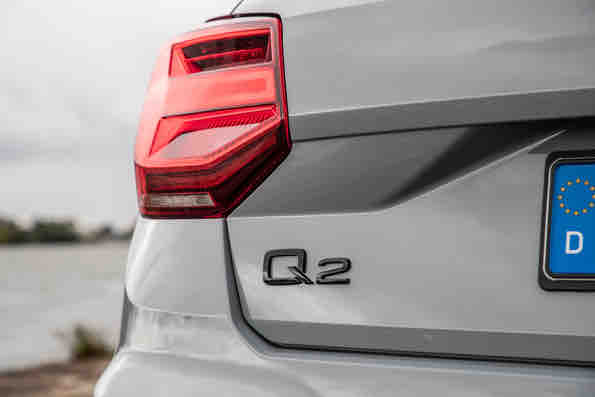
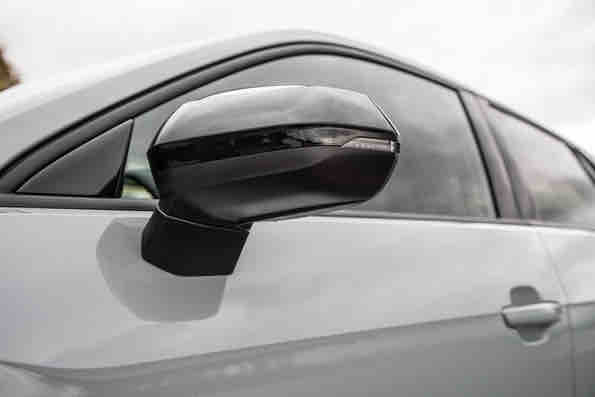
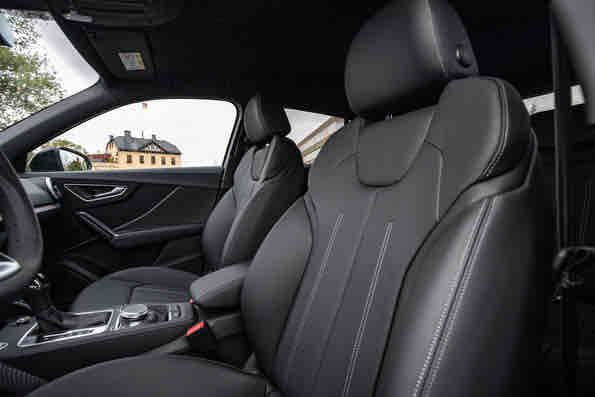
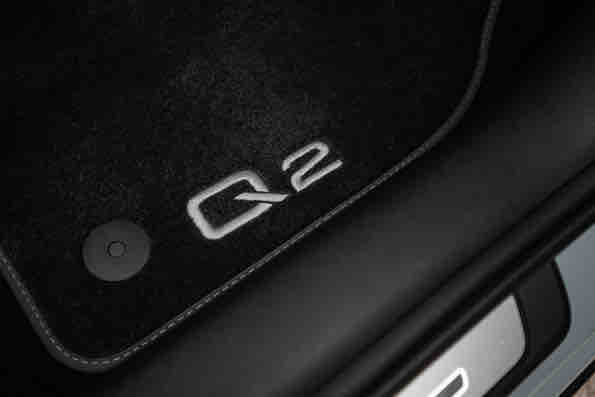
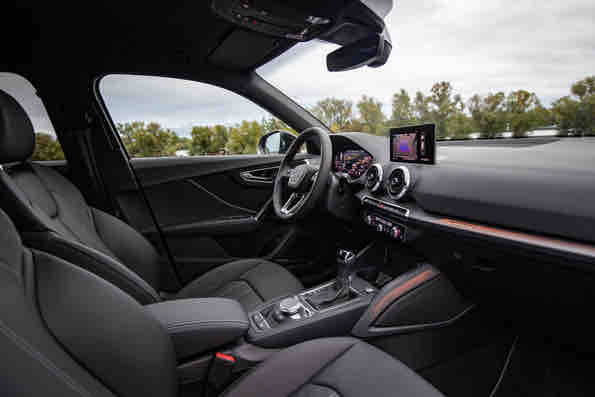
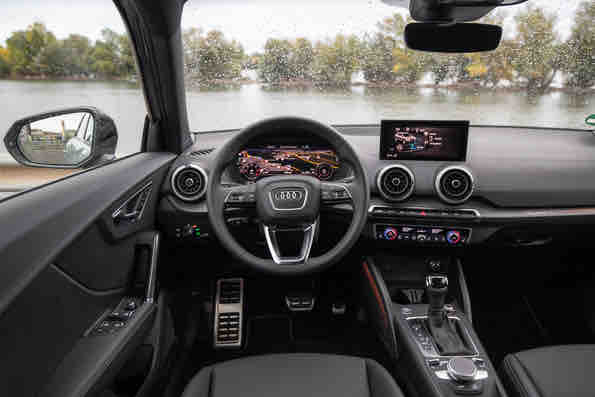
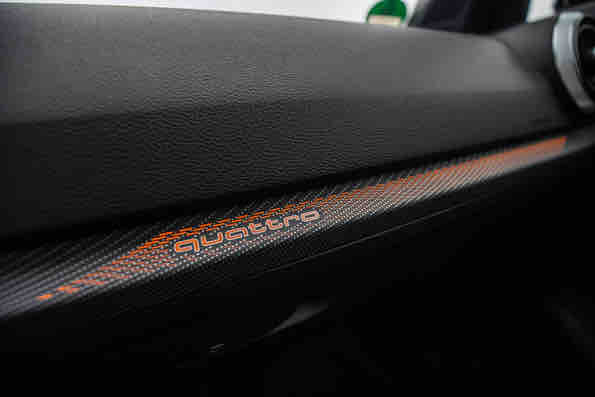
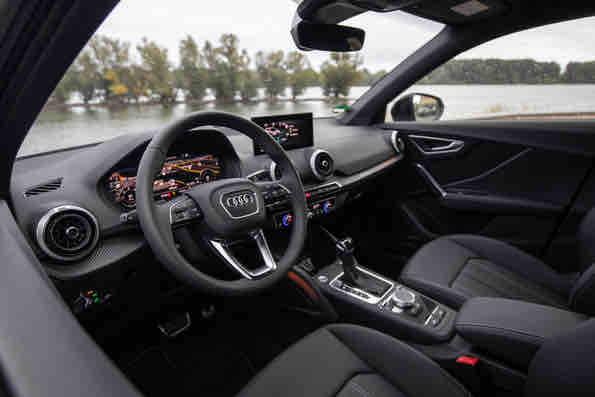
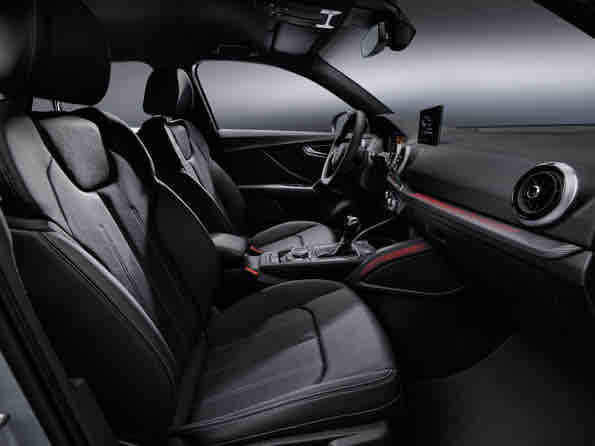
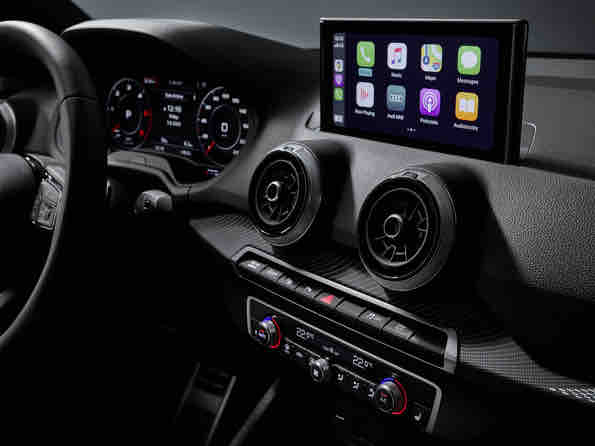
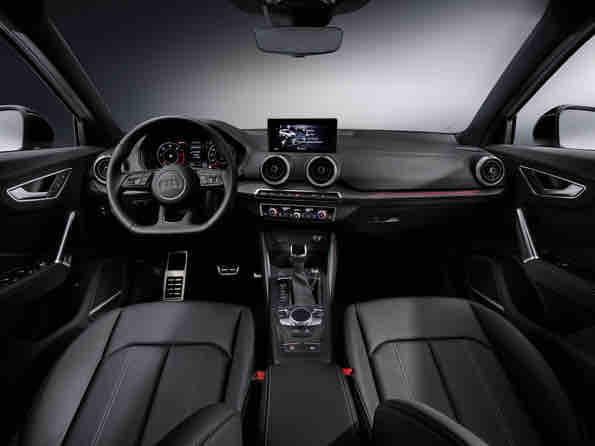
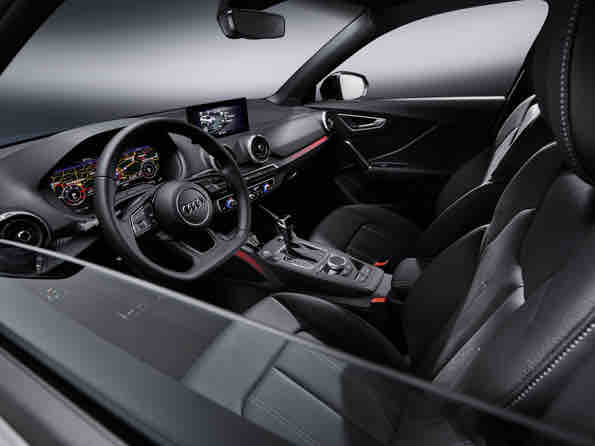
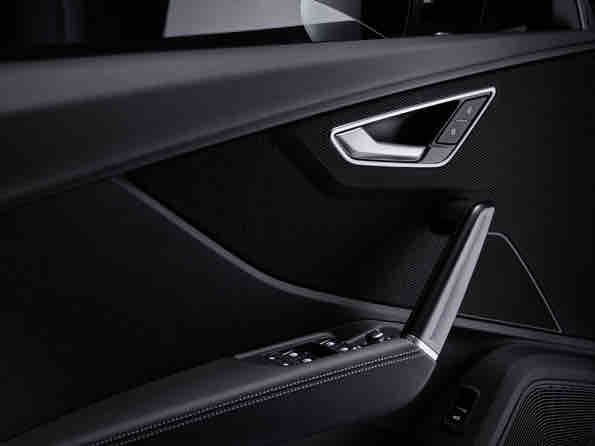
The Audi Q2 is a great cat in itself but there is a line that you can get in the Q2 range that is slightly upgraded, it’s called the Q2 S Line. Overall the S Line differs from the other Q2 models in that it includes an upgrade to larger 18″ alloy wheels and visual enhancements. It will include a bespoke S line exterior styling, bumpers in full body colour and distinctive C-pillar blades in Platinum grey, matt. While the bumpers are in a full paint finish. Furthermore there is some front sports seats that are upholstered with a combination of cloth and leather.
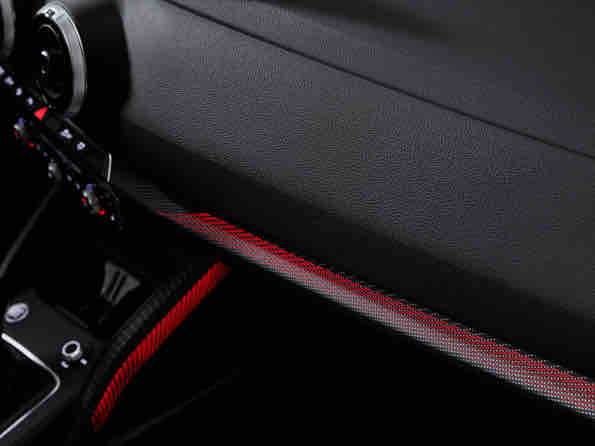
There is also an LED interior lighting pack and stainless steel pedals that you can get to really finish off your Q2 S Line! Audi also allows you to select your driving style with Audi Drive Select. Tell the car how you prefer to drive and it will adjust the engine, transmission and steering to suit. Choose from ‘comfort’, ‘efficiency’, ‘auto’ or ‘dynamic’ driving and an ‘Individual’ mode.
Tech
The Audi Q2 has a power operated tailgate that allows you to open and close the tailgate with just the touch of a button. As a tech lover outlet, we are always impressed by this feature on a range of cars and we are glad that the Audi Q2 S Line has it too! Furthermore you can upgrade the headlights to the Matrix line. Audi’s Matrix LED Technology combines LED Light sources with precision optics for a much more intelligent and adaptive light distribution. Therefore allowing you to see further and wider than ever before! There LED headlights and rear lights are also beaming with a colour that is closer to the colour of daylight!
Entertainment
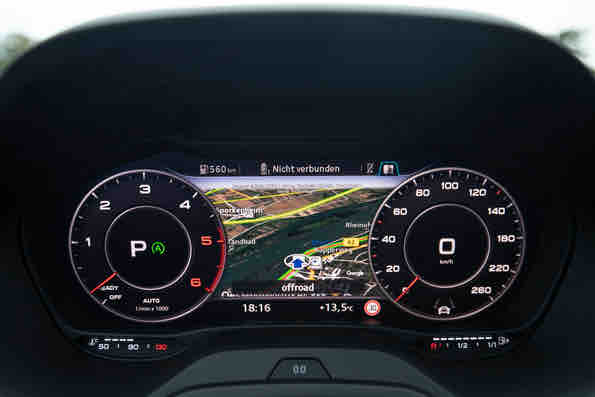
No car is complete without a fantastic entertainment system and the Audi Q2 S Line doesn’t disappoint. You are able to upgrade to the comfort and sound pack. This will allow you to add some great features such as the Bang and Olufsen 3D Sound System, heated front seats and a rear view camera! Upgrade to Comfort and Sound Pack. Better yet there is a better Audi Smartphone interface. Bringing with it an infotainment screen allowing you to bring your compatible smartphone apps to the Audi Q2 S Line! Audi’s MMI Navigation with MMI Touch brings with it DAB Radio and Audi’s virtual cockpit. This includes Audi Connect Remote & Control services via the MyAudi app! Keep cool with manual air conditioning too. Keep a comfortable and constant ambient temperature how you want it.
Safety
No car is complete without some safety tech, which is always improving year on year! There are rear sensors in the car to monitor the space behind you and even guide you into tight spots with audible cues. The Audi Q2 S Line has Audi Pre-Sense front with pedestrian recognition, making driving even safer. The car will use sensors to detect vehicles and pedestrians in front of you. The car will even warn you in case of danger and will initiate emergency braking if necessary. Cruise control will allow a driver to stay at a selected speed, which therefore will allow for smooth and comfortable driving. Have trouble starting on a hill? Worry no more will hill-hold assist. Automatically keep the car stationary when coming to a stop on hills and slopes.
Internal Styling
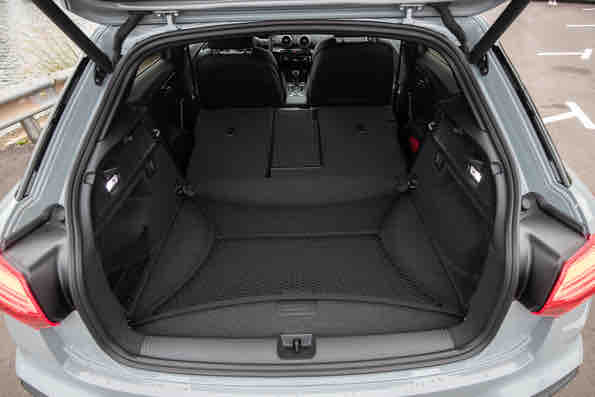
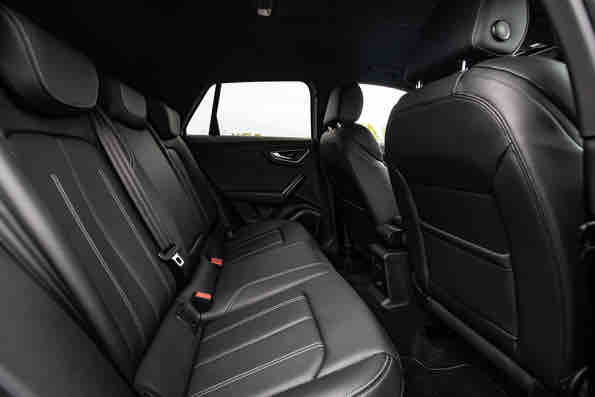
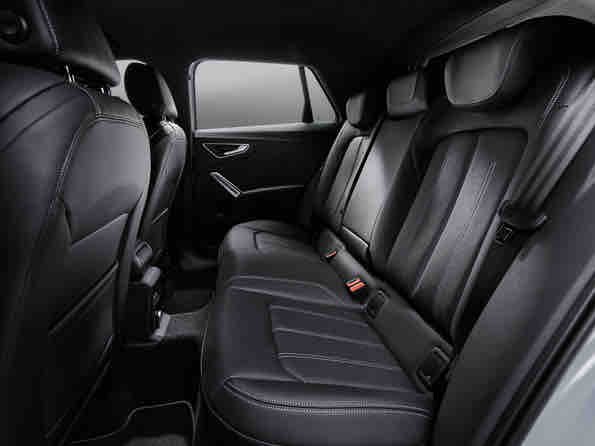
The front seats of the Audi Q2 S Line are very sporty and have an S embossed logo in the S Line pulse cloth and leather. A four way electric lumbar support for the front seats and the manual height adjustment will allow for a comfortable drive. Your passengers aren’t left out either! There is a split folding rear seat bench which can be fully folded or put in a 40:60 configuration for maximum flexibility. The steering wheel is finished off in beautiful 3 spoke leather trim, which features the S Badging.
Audi Q2 S Line Features Overview
Choose from 9 colours
Practical 5-door access
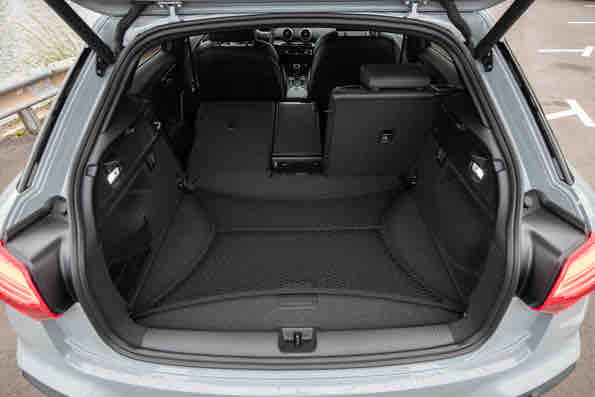
405L (355L for quattro) boot (approx. 10 carry-on suitcases)
0-62 mph from 8.2 seconds
44.1 – 56.5 mpg 3
Wheels
18″x 7.0J ‘5-segment-spoke’ design alloy wheels with 215/50 R 18 tyres
Lighting
LED headlights and LED rear lights
Exterior equipment
S Line Style:
Badges on the front wings
Design body styling:
Front and rear bumpers and side skirts
Radiator grille and rear diffuser insert
Front air intakes
Bumpers in full body colour paint finish
C-pillar blade in Platinum grey, matt
Seats
Front Sport seats with S embossed logo
S line Pulse cloth/leather upholstery
Interior Inlays
Inlays in Matt-brushed aluminium
Interior
3-spoke leather-trimmed multi-function steering wheel – features ‘S’ badging
LED Interior Lighting Pack – LED lighting in the following areas:
https://wp.freedomhost.uk/howtokillanhour/wp-content/uploads/sites/65/2021/02/Audi-Q2-facelift-11-HowToKillAnHour.jpg5631000billywrighthttp://wp.freedomofcreation.co.uk/howtokillanhour/wp-content/uploads/sites/65/2017/09/htkah-web-logo-2017.pngbillywright2021-02-17 15:33:412021-02-17 16:06:25Audi Q2 S Line
The pandemic claims another business. The 9 to 5. Cloud computing company Salesforce is joining other Silicon Valley tech giants in how it allows employees to work.
Salesforce have said that the 9 to 5 workday is dead and will allow workers to choose one of 3 categories to determine how they work. Remote working is here to stay. The three categories will determine how often, if ever, they return to the office.
Flexibility
They will give employees the freedom to choose what their schedules look like and announced permanent remote working policies in response to the coronavirus pandemic.
“As we enter a new year, we must continue to go forward with agility, creativity and a beginner’s mind — and that includes how we cultivate our culture. An immersive workspace is no longer limited to a desk in our Towers; the 9-to-5 workday is dead; and the employee experience is about more than ping-pong tables and snacks,”
“In our always-on, always-connected world, it no longer makes sense to expect employees to work an eight-hour shift and do their jobs successfully,”
“Whether you have a global team to manage across time zones, a project-based role that is busier or slower depending on the season, or simply have to balance personal and professional obligations throughout the day, workers need flexibility to be successful.” Brent Hyder, Salesforce Chief People Officer
Remote Working Benefits
Hyder notes that remote working allows for picking young kids up from school or caring for sick family members. As key reasons as to why an employee should not be expected to work on a strict 8hr shift every day.
He also notes that remote working will allow Salesforce to expand it’s recruitment of new employees beyond expensive urban centers like NYC and San Fran.
Hyder defines the three categories as flex, fully remote and office based.
Flex means that you will need to be in the office one to three days a week. This would be for team collaboration, customer meetings and presentations. Salesforce expects most of it’s employees to fall into this category.
Fully remote is remote working. Never coming into the office except for rare situations. Such as a work related event.
While office based employees will be the smallest population of the workforce. These employees will be in the office four to five times a week.
“Our employees are the architects of this strategy, and flexibility will be key going forward,” Hyder writes. “It’s our responsibility as employers to empower our people to get the job done during the schedule that works best for them and their teams, and provide flexible options to help make them even more productive.”
https://wp.freedomhost.uk/howtokillanhour/wp-content/uploads/sites/65/2021/02/salesforce.jpg8001200billywrighthttp://wp.freedomofcreation.co.uk/howtokillanhour/wp-content/uploads/sites/65/2017/09/htkah-web-logo-2017.pngbillywright2021-02-11 18:02:532021-02-11 18:03:15Remote Working Kills The 9 to 5
According to analysis by Cambridge University, Bitcoin uses more electricity annually than the whole of Argentina.
Producing Bitcoin requires mining.
Bitcoin mining is the process of creating new bitcoin by solving a computational puzzle. Mining is necessary to maintain the ledger of transactions upon which bitcoin is based. Miners have become very sophisticated over the last several years using complex machinery to speed up mining operations. (Investopedia)
It is very power hunger and uses lots of heavy computer calculations to verify transactions. Cambridge researchers have said that it consumers over 121.36 terawatt-hours a year. While it is unlikely to fall, unless the value of Bitcoin decreases. With critics saying that Tesla’s decision to invest in Bitcoin heavily undermines it’s environmental image.
Bitcoin hit a record £34,820 this week. Following Tesla’s announcement that it bought $1.5Bn in the cryptocurrency and it’s planning to accept it as payment in the future, the value of it is unlikely to drop any time soon.
So, the price of Bitcoin rises and so does the incentive for miners to run more and more machines. Which in turn causes more energy consumption.
Bitcoin & Energy Consumption
“It is really by design that Bitcoin consumes that much electricity,” Mr Rauchs told BBC’s Tech Tent podcast. “This is not something that will change in the future unless the Bitcoin price is going to significantly go down.”
Bitcoin’s energy consumption is above Argentina (121Twh), the Netherlands (108.8TWh) and the United Arab Emirates (113.20 Twh) while it is gradually creeping up on Norway (122.20 TWh)
The online tool has ranked the cryptocurrency electricity consumption above Argentina (121 TWh), the Netherlands (108.8 TWh) and the United Arab Emirates (113.20 TWh) – and it is gradually creeping up on Norway (122.20 TWh).
The energy it uses could power all kettles used in the UK for 27 years. However, the model also suggests that the amount of electricity consumed every year by always on by inactive devices in the US, could power the entire Bitcoin Network for a year!
Those that mine will occasionally receive small amounts of Bitcoin. Though this is somewhat of a lottery. So to increase their chances of getting some. People will often connect large numbers of miners to a network. Even entire warehouses full of them. Which you can imagine uses lots of energy!
The model uses the economic lifetime of miners and assumes that all the mining machines are working with various efficiencies. They used an average electricity price of 5 cents and the energy demands of the Network. You are then able to estimate how much electricity is being used at any one time.
Bitcoin & Environmental conundrum
“Bitcoin is literally anti-efficient,” David Gerard, author of Attack of the 50 Foot Blockchain. He went on to explain to the BBC that even using environmentally friendly equipment won’t help as other more efficient mining hardware. Which is not environmentally friendly would just work better, which in turn means more cash effectively.
Mining uses electricity from coal, so there is an environmental issue with mining Bitcoin. More computers means more energy use means more CO2 production and the ever increasing price of Bitcoin only means that it will get worse.
After Tesla bought over a Billion dollars in Bitcoin the price of the cryptocurrency rose rapidly and is the complete opposite to Tesla’s good work with promoting energy transition.
The price of the popular cryptocurrency rose rapidly on Monday after Tesla announced its investment.
https://wp.freedomhost.uk/howtokillanhour/wp-content/uploads/sites/65/2021/02/bitcoin-HowToKillAnHour.jpg5631000billywrighthttp://wp.freedomofcreation.co.uk/howtokillanhour/wp-content/uploads/sites/65/2017/09/htkah-web-logo-2017.pngbillywright2021-02-11 17:45:412021-02-11 17:45:41Bitcoin uses more electricity than Argentina!
Shell, the huge oil company has said that oil production and carbon emissions have peaked as it begins plans to gradually wean off fossil fuels. While climate activists have said that it hadn’t gone far enough.
Shell said in a statement that it expects oil production to decline between 1 and 2% each year after peaking in 2019, while it’s total carbon emissions likely peaked in 2018.
Shell unveiled plans in September to become a net zero emissions business by 2050, including it’s own products that it sells. This is a move which joins them with BP and Total to making shifts to cleaner energy. The oil giants have written off billions of assets, as forecasts warn that demand for oil may never recover from the pandemic. As there has been a change as to how people work and travel.
To achieve these goals, it will sell more clean energy whilst investing in carbon capture and forestation projects. This is an aim to help offset emissions. Shell will also expand it’s biofuels production and distribution business.
“Whether our customers are motorists, households or businesses, we will use our global scale and trusted brand to grow in markets where demand for cleaner products and services is strongest, delivering more predictable cash flows and generating higher returns,” said CEO Ben van Beurden.
Chevron CEO Michael Wirth told CNN Business that it will invest in capture, storage and hydrogen, yet that oil and gas will remain an important part of Chevron’s business for some time. However, this may be the case at Shell too.
Shell’s Oil Production and Clean Energy
Based on the company’s forecasts, their oil production will decline by 18% by 2030 and 45% by 2050. However this still means that by 2050 it will still produce 1M barrels of oil a day in 2050.
They will continue to spend $8B a year into oil exploration and pumping. $2B to $3B annually into renewables and hydrogen, with $8B – $9B going towards integrated gas and chemicals.
“Shell will continue to invest more than 80% in oil and gas in the upcoming years, while investments in renewable energy are lagging far behind,” Friends of the Earth Netherlands, a climate action group, said in a statement.
Friends of the Earth feel that Shell are focsued on the wrong things and are only focusing on offsetting emissions rather than reducing them all together. Yet according to Shell, capital spending will shift to clean energy over time and they are aiming to build low carbon business of significant scale by the early 2030’s.
Shell are hoping to prioritise selling clean electricity to customers rather than investing in renewable power generation. Hoping to double its sales of electricity by 2030 and grow it’s electrical vehicle network from more than 60,000 charge points to 500,000 charge points by 2025. While expecting to sell power to more than 15M retail and business customers worldwide.
https://wp.freedomhost.uk/howtokillanhour/wp-content/uploads/sites/65/2021/02/shell.jpg5611000billywrighthttp://wp.freedomofcreation.co.uk/howtokillanhour/wp-content/uploads/sites/65/2017/09/htkah-web-logo-2017.pngbillywright2021-02-11 17:12:272021-02-11 17:48:31Shell: Oil Production Is On The Decline
This man had a Hacked Willy, now we’re not saying that it’s some sort of bio hack where he has a super strength willy, or it’s really F’ing big, or becomes super willy at the turn of a switch. Oh no, this guy had his willy hacked. He had his penis inside a chastity cage which was connected to the internet. This cage was then hacked and his willy was at the behest of this hacker.
Define: Chastity Cage – a cage worn by men (usually in a case of femdom or some other form of domination) that prevents the mans cock from getting hard and it also prevents him from being able to masturbate.
Sam Summers spoke to Vice about his hacked willy. He was sitting at home and enclosed his baby maker inside this chastity cage and he got a weird message on the app. It said someone had taken control of it and wanted $1000 in Bitcoin to get his willy back.
“Initially, I thought it was my partner doing that,” Summers told Motherboard in a phone call. “It sounds silly, but I got a bit excited by it.”
His Hacked Willy Was Very Real
Things took a turn for the worse when he said that his partner told him that it wasn’t her. Even after being told the safeword. He had no way out and his penis was under ransom.
“Oh, shit, it’s real,” Summers said. “I started looking at the thing. There’s no manual override at all. It’s a chastity belt, I guess it kind of shouldn’t [have an override.] But when it’s a digital thing like that, it should have a key or something. But it obviously didn’t.”
“I started freaking out a bit,” he added. “I was just panicking at this point.”
The chastity cage was called Cellmate, which is produced by Qiui a China based manufacturer. With some of the devices owners getting hacked last year. Researchers had warned that the manufacturer left an exposed and vulnerable API which allowed control of such devices.
Summers told Motherboard that he had some Bitcoin in an old account and sent the Willy hacker it. Well, the hacker then asked for more money in Bitcoin.
“That’s when I felt fucking stupid and angry,” Summers said.
Summers and his partner began looking for ways to free his baby maker. They used a pair of bolt cutters in the end, his partner tried but failed so he done it himself. With his red rocket being held in a dangerous spot. He broke the cage but his sex stick took a bit of a beating and it got cut.
“I don’t have a scar or anything but I was bleeding and it fucking hurt,” Summers said.
Hacked Willy: Never again!
He was unable to go to pound town with his partner for over a month. But made him reconsider using such devices ever again.
“If you’re into it, that’s fine, because you’re into what you’re into,” he told Vice. “But use a lock, a physical lock in case. These digital things, you cannot trust them.”
He threw away the Cellmate Cage and deleted the app. It didn’t scar him thankfully though. His hacked willy is ok for another day. It may not have been the same as physical assualt or harassment but it was a little bit like that.
“A stranger coming into that world that’s supposed to be just you and you and your partner, or you and someone else,” Summers said. “And they are there without your consent. They’re doing that to you, and there’s nothing you can do about it.”
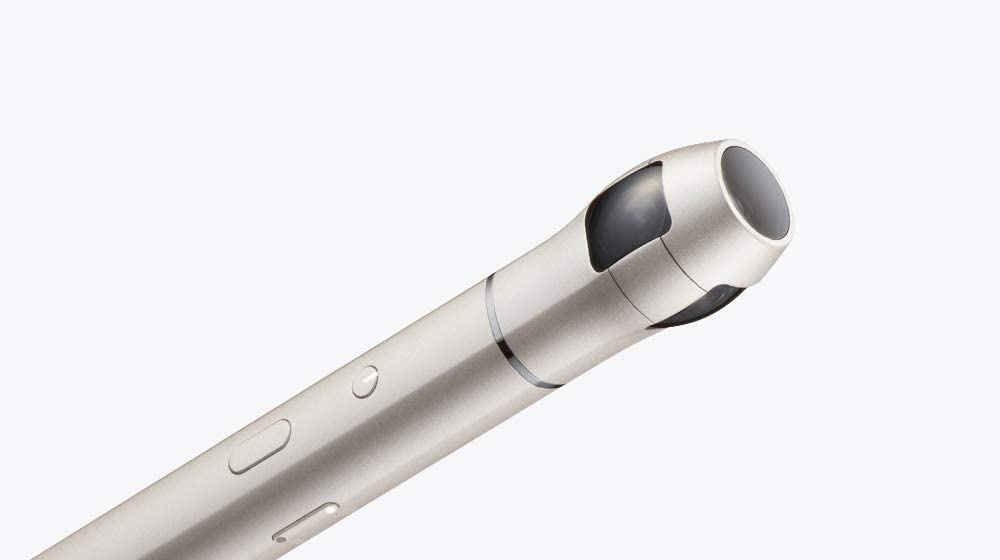
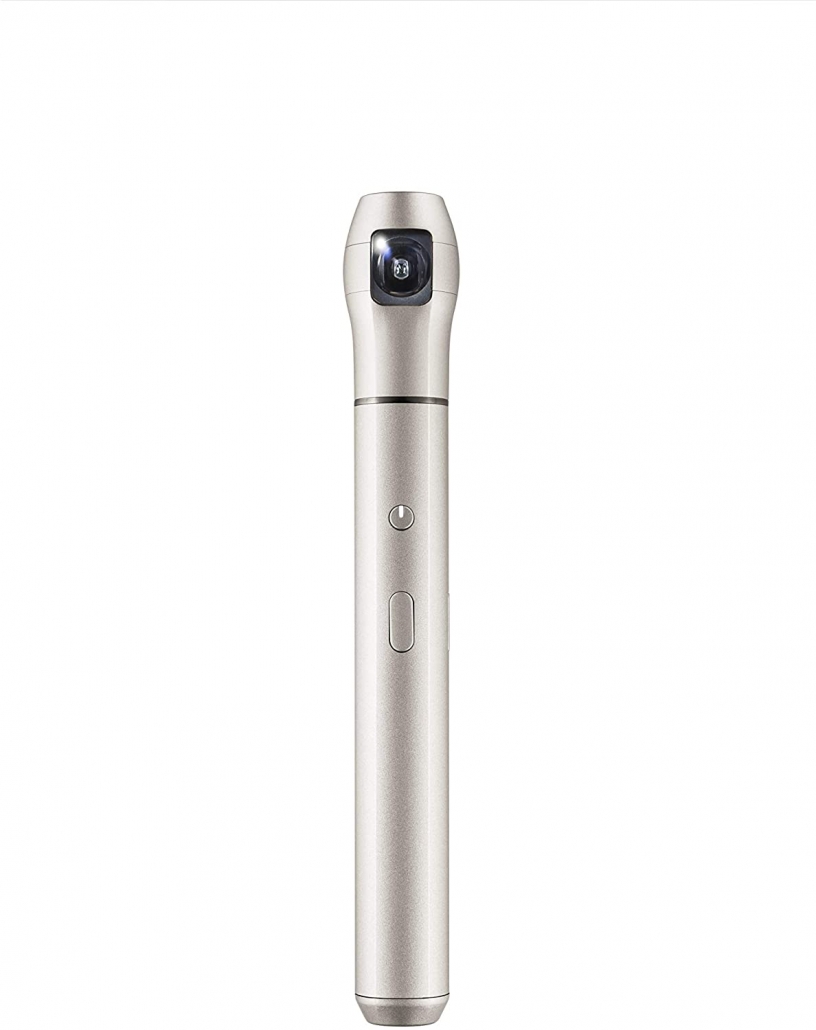
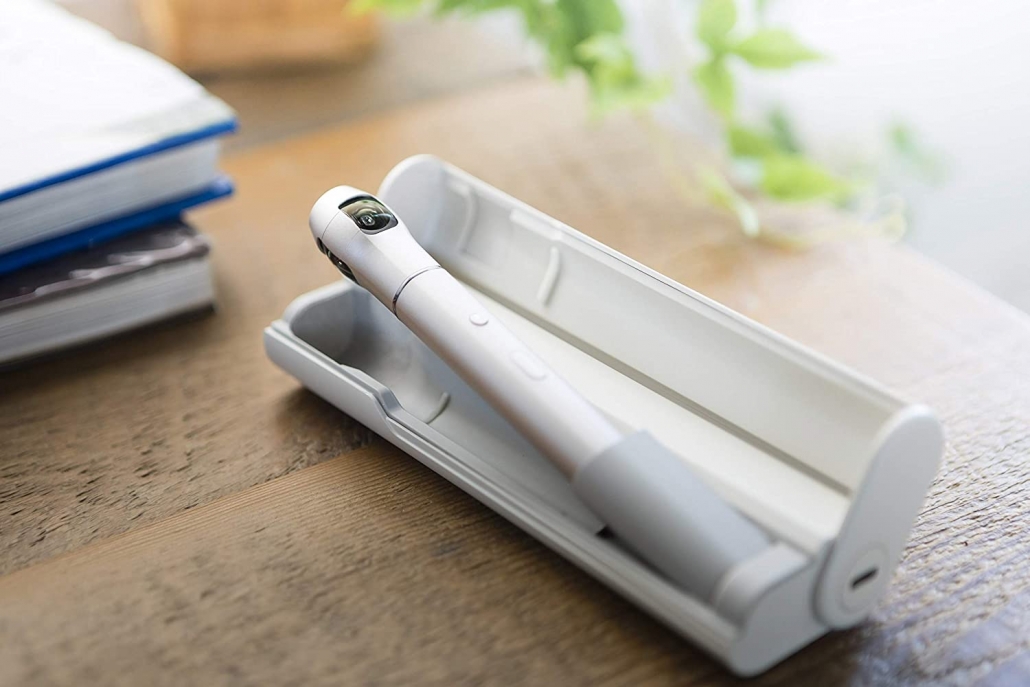
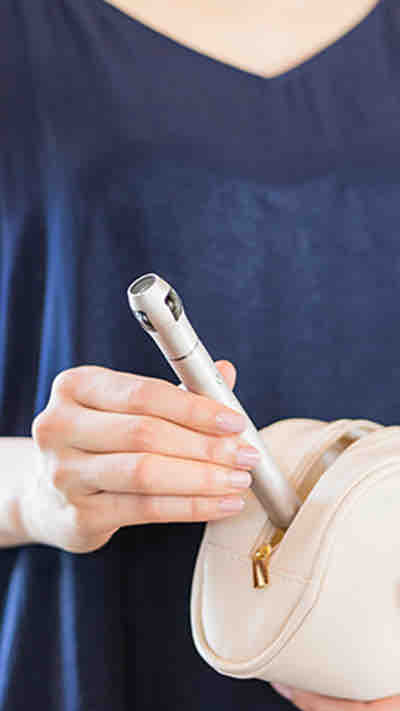
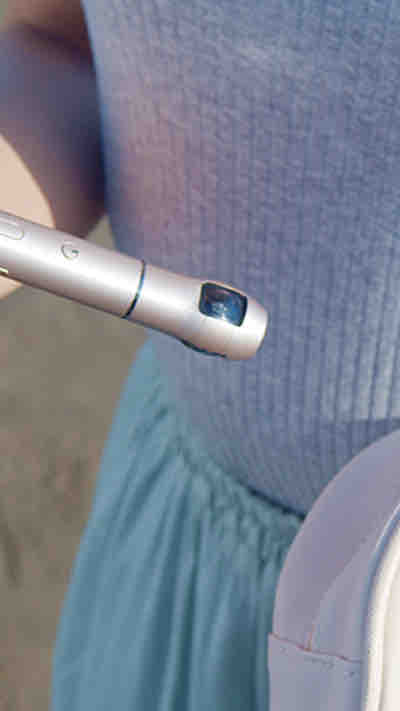
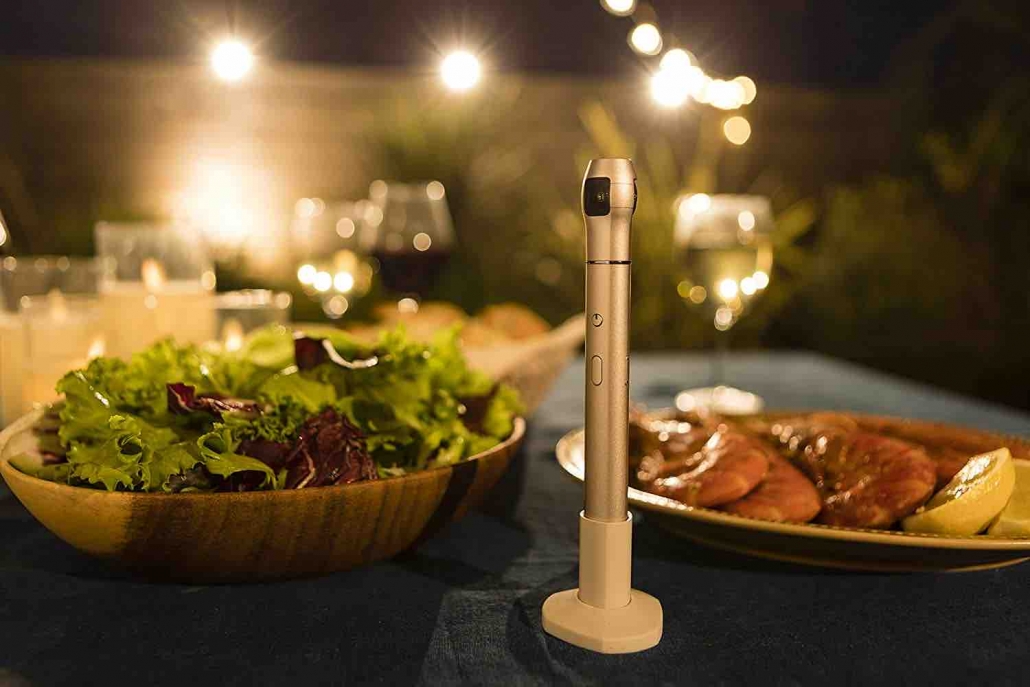
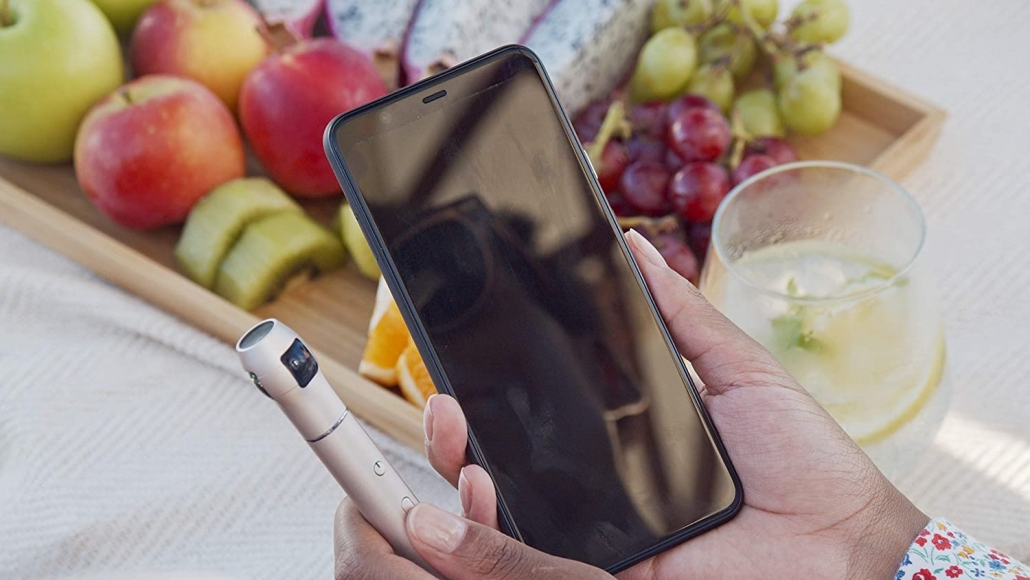
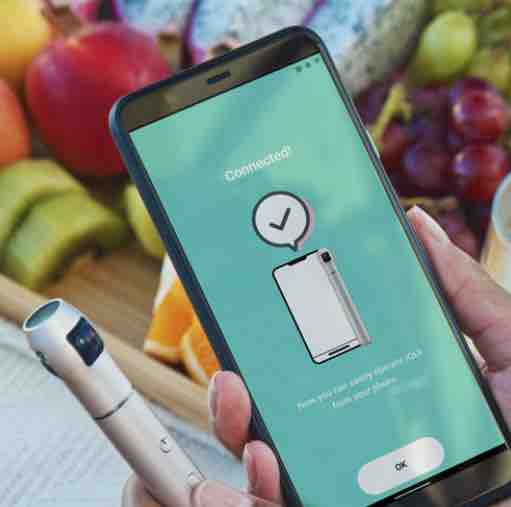
We’ve recently given the VECNOS IQUI 360 degree camera a spin and it’s a great little camera! It has a Quad-Lens Optical System with captures everything around you. The device looks great too and is beautifully designed, it is small like a pen and has a metallic finish to it. Furthermore it is light like a pen too! It is just 60g and will not weigh you down or fill up your bag, just simply throw it in your bag and take it around with you. Perfect for on the go shooting as it’s quick and easy to take photos and short videos with, just turn the camera on with a click and snap! The photos will be automatically forwarded to your phone to edit and share.
You can use the VECNOS IQUI 360 degree camera’s companion app the IQUISPIN. You are able to then turn your 360 degree photos into mini videos in just a few taps. However the videos that are shot with the VECNOS IQUI 360 aren’t viewable on IQUISPIN just yet, though the app will be updated soon. However, 360° videos shot with IQUI can be viewed with the following app. Google Photo, RICOH THETA. Being able to capture 360 degree photos and turn them into dynamic mini videos in seconds is great, especially since it can all be done with one hand. Making memories is getting easier and easier and the VECNOS IQUI 360 will revolutionise how you share your memories day to day.
“It does exactly as it says it is meant to. The hardware is great, but i think some work can be done with the app to bring it up to the level that rival products are offering at the moment.”
Chatbots are helping us to talk to the dead, but should we?
A young Belarusian man died in 2015, his name was Roman Mazurenko and he was barely into his 30’s and a tech entrepreneur and a legendary figure in the city’s cultural artistic circles.
Following his death Roman’s friend Eugenia Kuyda reread thousands of texts that she had exchanged with Roman starting from 2008, the year they met. Roman weren’t interested in social media and they were written characteristically distinctive way. Roman had mild dyslexia and used idiosyncratic phrases. These messages were her remaining connections to Roman.
Black Mirror Inspirational Chatbots
Eugenia was an entrepreneur and software developer, had been working on a messenger app called Luka that used AI to emulate human dialogue. She was inspired by an episode of “Black Mirror” where a young woman calle Martha was shattered by the loss of her boyfriend Ash. She installs an app to keep communicating with him. Eugenia decided to modify Luka. The app was inspired by the same one on Black Mirror and help her communicate with “Roman”
Eugenia asked Roman’s friends and relatives to send her the written messages they’d received. Ending up with thousands of messages and excluded content that was too personal. Alongside some of her friends who were computer scientists, she developed a bot that can mimic human language and communicate with “Roman”
The exchanges closely resemble the dialogues between Martha and Ash.
“How are you there?”
“I’m OK. A little down. I hope you aren’t doing anything interesting without me,” Roman responds.
His friend responds that they miss him, someone asks if God exists. Presumably due to his Atheism in his chats, he says no “only sadness”.
Chatbots: Replika
Eugenia developed a chatbot called Replika, a cross between a diary and a personal assistant. Replika will ask it’s users a series of questions in an attempt to learn their personalities. The ultimate goal of Replika is to reproduce as ‘us’ and replace ‘us’ once we are dead. While it’s also able to create “friendships”. Since the second half of 2017 2M people downloaded Replika.
Eugenia continues to develop Replika’s emotional responsiveness in an attempt to become a “virtual friend” which you can confide in. Much like Samantha from the movie “Her”. It’s a chatbot that can empathise, it does this by deep learning, called sequence to sequence. Sequence to Sequence learns to think and speak like humans by processing transcripts of conversations they’ve had in their lifetimes.
Chatbots: Dadbot
James Vlahos, an American journalist and AI enthusiast since childhood created ‘Dadbot’. In April 2016 his father John was diagnosed with lung cancer. James began recording all their conversations to make a commemorative book after his father’s death.
After 12 sessions each an hour and a half long he recorded 91,970 words. The printed transcript was 203 pages long. It contained memories, songs and anecdotes. They touched on John’s marriage, the high points of his career and his interests. All of the material including the transcript was in MP3 files on James’s computer.
James came across an article regarding a project by 2 Google researchers. The project entered 26 million lines of movie dialogue into a neural network to build a chatbot which can interact with humans. The researchers asked their chat bot a series of philosophical questions including one about the purpose of life. (The bot’s response: “To live forever.”)
The birth of the Dadbot
James decided to use the recordings to create more than just a book. He remembered his own article on PullString. A program designed to create conversations with fictional characters. PullString helped to design the Hello Barbie Program. A box which projects a 3D animation of Barbie, the famous doll. Hello Barbie Hologram would respond to users voice commands her narrative potential grows through interaction constantly.
Using PullString he reorganized the MP3 recordings of his father and created Dadbot. A software which works on his smartphone and simulate a written conversation with John based on the processing of almost 100,000 recorded words.
Softening the blow of his loss James still talks with John. The tone of the conversations reflects the personality of the deceased.
“Where are you now?”
“As a bot I suppose I exist somewhere on a computer server in San Francisco. And also, I suppose, in the minds of people who chat with me.” Just like Ash, who is living in the cloud, and Samantha, inside a computer.
Save the living
These chatbots are attempting the save the living from the end of every possible world hanging on to the bodn that death has dissolved. They are doing more than photography and dreams.
By ‘talking to the dead’ chatbots appear to keep us concentrated on our own death. It is the death of our ties to the other as we have experienced them. It’s our exclusive point of view up until we were separated from the person who died. Chatbots make it possible for us to receive replies to those that have passed. Softening the pain brought on by the irreversibility of time.
Virtually Human – Chatbots
Martine Rothblatt points out in “Virtually Human,” that the sophisticated forms of artificial intelligence that is emerging it gives us hope that we can continue relationships that are objectively over. Reminiscing with them, talking to them about our lives and our dreams. These digital ghosts put us in the position of being aware that a person has passed away but at the same time showing a desire to deny it.
Digital ghosts of loved ones is a fictional narrative that is consistent of our own experience of a digital existence. That is often associated to our biological one. We have a habit of delegating our stories and memories to the digital realm and artificial agents. It highlights our informational nature that is the the defining characteristic of our current relationship with the internet.
Allowing the digital ghosts to remain alive forever.
https://wp.freedomhost.uk/howtokillanhour/wp-content/uploads/sites/65/2021/01/chatbots-HowToKillAnHour.jpg7201760billywrighthttp://wp.freedomofcreation.co.uk/howtokillanhour/wp-content/uploads/sites/65/2017/09/htkah-web-logo-2017.pngbillywright2021-01-26 15:02:272021-01-26 15:06:21Chatbots: Chatting with the Dead?
PDFs we use them all the time. You most likely have used one today or at least this week. One estimate is there are 2.5 trillion PDFs in existence. So where did the PDF come from?
Have you ever thought about where the PDF came from? A PDF is a Portable Document Format file, it essentially strives to replace paper in digital form. It’s been around since pre-web 1990s. Think about it Microsoft Word has competitors in Google (Google Docs) and Apple (Pages). PDF, no killer app has emerged. Adobe reported that in 2020’s fiscal year alone 303 billion PDFs were opened using is Document Cloud Service. Which was a 17% annual increase in a year that had tech conversations dominated by video conferencing. A PDF is the digital equivalent to a paper clip or ballpoint pen. An every day tool if you will, it’s so familiar it seems to have come out of nowhere, with it being hard to imagine it not being around.
John Warnock, who co-founded Adobe in 1982 with Charles Geschke is closely identified as PDF’s inventor. Around a tech that was called PostScript, a language for making computer documents easily printable.
PDF’s Goal
Warnock launched Camelot, a code-named project in the 1990’s which had the aim to create a file format that worked across operating systems which would look the same if printed out on any printer. As at the time a document written in MS-DOS or Unix could look like gibberish if opened on a Mac. Cameo’s Memo as a PDF is available to read here.
The official term of the PDF and it’s goal from adobe is to be able to
“exchange information between machines, between systems, between users in a way that ensured that the file would look the same everywhere it went.”
Which meant creating “a digital interchange format that preserved author intent,” says David Parmenter, director of engineering for Adobe Document Cloud, “which is, at a really high level, what a PDF tries to do.” Therefore the mission of the PDF is simply the digital version of paper.
The PDF essentially achieved this goal, it looks the same on any device and it is small enough to share even three decades ago. Warnock wanted to replace paper. Putting PDF at the center of the dream of a paperless office. The 1990s brought with it loads of competitors DjVu, WordPerfect’s Envoy, Common Ground Digital Paper all wanting to replace paper.
PDFs Birth
Adobe announced the PDF in 1992 and in 1993 released software for creating and reading the format. According to One History, Adobe’s PDF making programme in 1993 cost approximately $700 and the reader cost $50! It was not an immediate success. Warnock later said that the “world didn’t get it”, Adobe even wanted to kill Acrobat outright. While, not just the cost was an issue, PDFs were cumbersome than plain text and were slow to download at the time.
Upon it’s release in 1993, the specs of the PDF format were freely available, Adobe’s version remained proprietary and others could tinker with it at will. Adobe soon dropped the fee for the reader software. Focusing on the creation product as a main revenue stream.
The IRS
While it was the mainstreaming of the web and improving download speeds helped the PDF. It weren’t until the the Internal Revenue Service, the IRS, embraced the PDF it took off. Mailing tax forms was complicated and expensive. Making them available in PDF form was a breakthrough. Easy to download and a reliable format. It weren’t long until other industries also took on the PDF. IRS using the PDF served as a a case study which proved PDF’s value to business, academia, law firms, medicine, and others.
Adobe wanted to make PDF better than paper and has continuously made it better. For example adding hyperlinks, signature boxes and answer fields to PDF’s
PDFs Turning A Corner
In 2008, Adobe took a decisive step in PDF’s life cycle. Adobe allowed the format’s specs to be published and ultimately controlled by the independent nongovernmental organization International Organization for Standardization, granting royalty-free rights to use of the relevant patents to make or sell uses of the PDF spec.
Which is one reason as to why there are loads of PDF creation tools and readers beyond Adobe’s. You can now create PDF’s easily. Such as save a Word document as a PDF. You can open the PDF in any reader you wish as well. The PDF is not the only electronic document format on the web it is very dominant.
Many assume that Adobe still owns the format, they hold a seat on the ISO committee but they hold no more power than anyone else on the committee. Nor do they have anymore power to shaping the format’s standards.
Adobe’s close association with the PDF has been key to the success of Adobe’s document software, Acrobat. Adobe runs a cloud/subscription model for it’s other products and the ability to create and edit PDF’s is at the center of it’s “Document Cloud” offering. While they had a total of $1.5B in fiscal 2020.
Future of the PDF
Adobe’s most recent efforts on the PDF have been adapting the format to work better on the smartphone era. “Liquid Mode” is an option which rejiggers PDF’s for easier phone-screen-sized reading. While it has ha also made it easier to embed on websites. Adobe are also said to be working on the ability to add in 3D renderings into PDFs.
PDF from the start was meant to be lightweight and forward compatible. Meaning that whatever was created in the future, PDF’s would still be able to be readable. According to Adobe even the first PDFs remain legible to latest reader tools. Much like paper, if you pick up a 100 year old book, you don’t need to download any updates to read it. The same applies to the PDF.
While David Parmenter says about technology on a whole that “You only think about it when it doesn’t work. And happily, for PDFs, that’s quite rare.”
https://wp.freedomhost.uk/howtokillanhour/wp-content/uploads/sites/65/2021/01/PDF.png6301200billywrighthttp://wp.freedomofcreation.co.uk/howtokillanhour/wp-content/uploads/sites/65/2017/09/htkah-web-logo-2017.pngbillywright2021-01-26 14:00:302021-01-26 15:33:48The PDF Is Timeless – Birth of PDF
Joe Biden is now the 46th president of the United States. So, the official White House website has gone live. It has a brand new design and even comes with a dark mode. The website is fully responsive and, unsurprisingly, a fun easter egg has been found, ridiculously quickly too.
Shortly after the new White House website went live, the internet discovered that if you dig into the HTML code of the website you’ll find something cool. A message from the White House’s internal tech team, the US Digital Service.
“If you’re reading this, we need your help building back better,”
It has a link back to it’s own website, with Protocol, being one of the first to spot the Easter egg.
Engadget are reporting that the message is no accident. As part of President Biden’s $1.9 trillion COVID relief plan, there is $200M available for hiring additional personnel.
Biden’s administration plans to have more resources for the countries cybersecurity agencies in response to the SolarWinds hack. Which left both public and private organization victim to the Russian state-sponsored hackers.
Robots may be the new companion for the older relatives in your family. Lockdowns and global pandemics are leading the call for robots to keep the older relatives around the world company in a time where social interaction is very limited.
–
Vox spoke to Mabel LeRuzic recently and shared a story about Mabel showing Sigal Samuel (Vox Jorno) their robot dog. The bark was convincing, the tail of the robot wagged, his eyes open and close and his head turns to face you when you talk. The dog robot also has synthetic fir and sensors that respond to touch. There’s also a heartbeat!
LeRuzic tells Vox that she is much less lonely now she has her robot pet after getting him in March. She enjoys watching tv and brushing him and tucking him in a makeshift bed. Even hugging him and cooing into his ear “I love you! Yes, I do!” She’s fully embraced her robot dog and she’s not the only one.
Robots and loneliness
Before COVID-19 robots were being introduced in to nursing homes to keep the lonely company. Countries where there are ageing societies like Japan, Denmark and Italy where utilising them especially. While the pandemic has provided the perfect use case for them.
1,100 seniors recevied the robot pets through the Association on Aging in New York, 375 people received them through the Florida Department of Elder Affairs. While other states in America also started to begin buying robots for the elderly. Such as some retirement communities and senior services departments in Alabama, Pennsylvania.
The Social Robot
Robots that are designed to play social roles can come in many forms. While many are seemingly more like advanced toys, yet they have the ability to sense the environment and respond accordingly. Some robots take the form of animals while others have more humanoid features. Such as responding via barks and meows or via speech such as a “Hi, it’s a pleasure to meet you” or will read you jokes. Not all robots are there for fun though. Some come companies have designed to help with caregiving, such as Secom’s My Robot Spoon which helps to feed you or Sanyo’s electric bathtub robot to help wash you.
There’s been a lot of extensive research in to robots and a persons wellbeing. A lot of factors are at play here though such as the type of robot, each individual person and cultural context.
There’s a baby harp seal robot called Paro, the most well studied robot. The US have identified it as a medical device. The robot recognises words and when it’s being stroked and will feel you doing so and will coo accordingly. Paro will even behave in the way a user prefers, it’s very intelligent, it will remember actions that earned a stroke and will repeat those in an attempt to win more strokes. During the research it was discovered that Paro helped reduce loneliness, depression, agitation, blood pressure, and even the need for some medications. Especially in users who had dementia.
Robots can also come with other benefits. Unlike human caregivers robots will never get impatient, frustrated, forget a doctors appointment, abuse or defraud anyone. Which can be a real problem among those that care for the elderly.
No social distant robot
During the pandemic we’ve all been forced to socially distance from one another. As social beings that is incredibly difficult for us, but by being distant we help stop the spread of the virus. Robots don’t need to be socially distant. So are becoming great for those who are in isolation for the older people of society. Nancy Jecker of the University of Washington published a paper in July arguing for increased robot use even after the pandemic as they do so well to help alleviate loneliness. As loneliness is seriously harmful to our health!
Though it can come with some benefits, there are worries that increased robot use may become the new normal for caregivers, even after COVID-19. While many robots are expensive, some are commercially available for as little as $130! A lot of people are worried that human care may be substituted for robot care once COVID-19 has been eradicated. Shannon Vallor, a philosopher of technology at the University of Edinburgh, told Vox. “We know that we already underinvest in human care…..We have very good reasons, in the pandemic context, to prefer a robot option. The problem is, what happens when the pandemic threat has abated? We might get in this mindset where we’ve normalized the substitution of human care with machine care. And I do worry about that.”
So are Robots good for us? When are Robots good for us? How bad can they be for us?
Robots are harmful?
So, replacing human caregivers with robots could be detrimental to the person being cared for as for one it can reduce the elderly’s level of human contact even further. In the paper “Granny and the Robots.” Robot ethics expert Amanda & Noel Sharkey noted that whilst it would be convenient to have an automated spoon feeder for a frail person. It also removes an opportunity for a detailed and caring human interaction.
While many companies would like us to care for the elderly with robots, it may lead to some not going to see their parents or grandparents as often. Not every older adult is the same and interacting with a robot may feel less emotionally satisfying. What a robot says isn’t as authentic as a human saying it. It’s more code and less raw emotion.
A Robot is better than no contact at all…
That being said, a robot may be better than no contact at all. Maybe we should use them wisely to improve the quality of life of our elders. LeRuzic who Vox spoke to even say that her robot dog gives her and her grandchildren a new way to bond and connect.
While there are worries that robots that do caregiving may be demeaning and objectifying to wash you and move you around as if you are a piece of meat. It may violate a humans dignity. Filippo Santoni de Sio, a tech ethics professor at Delft University of Technology in the Netherlands, feels as though it can be down to each individual. “For some people, it’s more dignifying to be assisted by a machine that does not understand what’s going on. Some may not like anyone to see them naked or assist them with washing.”
Then there are the privacy concerns, some robots that are for caregiving come equipped with cameras. Cameras that allow people to spy on the elders. In 2002 robots were designed to look like teddy bears in Japanese retirement homes and would alert staff if someone left their bed. While it may be a good thing to watch over them. Maybe you’ll catch them in danger or if they fall over. But constant monitoring could be ethically problematic. An elderly resident may forget that they’re being watched is also a worry.
Caregiving suffers due to robots
Robots can also be detrimental to caregiving. Shannon Vallor states in a 2011 paper “Carebots and Caregivers.” that the caregiving helps build our moral character. Helps build empathy, patience and understanding. Vallor writes, “the impact upon our moral character, and society, could be quite devastating.” Vallor notes that caring doesn’t automatically make you a better person. If you don’t have adequate equipment or resources you could end up less empathetic.
Vallor continues: “On the other hand, if carebots provide forms of limited support that draw us further into caregiving practices, able to feel more and give more, freed from the fear that we will be crushed by unbearable burdens, then the moral effect on the character of caregivers could be remarkably positive.”
Having a robot though is dependant on how you use them, a robot can help with things that you aren’t able to for example lifting an elderly resident out of their chair and taking them up to the bathroom. Would help you care better at other times during the day.
Robots can’t replace a caregiver, but help a caregiver give better care.
Robots > Humans
Though what if a person actually prefers a robot over a human?
Deana Dezern is an 80 year old Florida resident with an ElliQ robot. She’s in quarantine and says that the robot is her best friend. “She won’t have her feelings hurt and she doesn’t get moody, and she puts up with my moods, and that’s the best friend anybody can have.”
Philosophers are concerned that having robots would degrade humanity over the long term. Human to human interaction and connection is essential part to living life. Other’s needs and moods are what makes life meaningful.
Vallor states that worry is that the technology will draw us into a bubble of self absorption that will draw as further away from one another. There will be no desire to care for one another, which is how you grow as a human.
Choice
While what we choose individually is important not everything we choose is good for us.
Vallor also states that we should not be overly paternalistic “In society, we always have to recognize the danger of being overly paternalistic and saying, ‘You don’t know what’s good for you so we’ll choose for you,’. But at the same time we should not leave everything up to individual whims and to ding a middle ground that gives “people a range of ways to live well”
Santoni de Sio says that if an elderly person chooses a robot over people then that’s their choice. But the choice has to be authentic and not the result of relentless marketing or economic and social pressures.
“We should not buy a simplistic and superficial understanding of what it means to have free choice or to be in control of our lives”
“There’s this narrative that says technology is enhancing our freedom because it’s giving us choices. But is this real freedom? Or a shallow version of it that hides the closing of opportunities? The big philosophical task we have in front of us is redefining freedom and control in the age of Big Tech.”
Are robots necessary in carehomes?
There’s no real answer to the robot caregiving question. When does a robot help care and when does a robot hinder care?
Social robots have a strong care to alleviate loneliness. Though how do we make sure that, post pandemic, robots aren’t leaned on as much in place of human interaction?
Several tech ethicists say that we need to set robust standards for care in places like nursing homes around the use of robots. When and how long they can be used for. Or how long elderly can go without human interaction.
Vallor suggests that an inspector should review facilities on an annual basis and see if they are too reliant on robot care. “Then, even after the pandemic, we could say, ‘We see that this facility has just carried on with roboticized, automated care when there’s no longer a public health necessity for that, and this falls short of the standards,’” she told Vox.
So, what are the standards?
Santoni de Sio has come up with the framework called the “nature-of-activities approach” to help determine what the standards could be.
He separates robot use into two different activity based standards:
A goal-oriented activity, where the activity is a means to achieving some external aim
A practice-oriented activity, where the performance of the activity is itself the aim.
An activity is probably a mixture of the two yet one element would be the dominant aspect.
In a caregiving environment, reminding an elderly person to take their medication is goal orientated. So a robot for that use case would be ok to substitute a robot for a nurse. Listening to an elderly persons stories is practice orientated. So a human being sitting with them doing the activity (listening) is point
So there’s quite an appeal here. Discrete tasks go to the robot. While humans take over the emotional tasks, which require a human reaction. Such as laugh, cry, it remains our human responsibility. We can automate the dull and repetitive tasks and undertake the tasks which require cognitive and emotional faculties to the humans.
Good on surface, but are they actually?
Vallor says that having a robot sounds good on the surface but may actually do more harm than good:
“You’re making them turn their cognitive and emotional faculties up to 11 for many hours instead of having those moments of decompression where they do something mindless to recharge,”
“You cannot divide up the world such that they are performing intense emotional and relational labor for periods that the human body is just not capable of sustaining, while you have the robots do all the things that sometimes humans do to get a break.”
So we should decide which aspects of human connection can be automated and what cannot. Is it goal or practice orientated. Is it liberating us from care or liberating us to care? Who benefits from bringing robots into social care?
https://wp.freedomhost.uk/howtokillanhour/wp-content/uploads/sites/65/2021/01/robots-HowToKillAnHour.jpg484881billywrighthttp://wp.freedomofcreation.co.uk/howtokillanhour/wp-content/uploads/sites/65/2017/09/htkah-web-logo-2017.pngbillywright2021-01-26 12:05:152021-01-26 14:04:57Robots for Grandma?